This weekend was spent bouncing around a few different institutions, including the New York Public Library (NYPL) Stephen A. Schwarzman building, The MET, and the Morgan Library and Museum, meaning that I have sufficiently explored the midtown area, and a few blocks of the upper east side. As a side note, I am fortunate that in my internship this summer I am given one day a week (typically Fridays) to go in to the city and explore museums and cultural heritage institutions, with the hope that I am also connecting to a network of professionals who work at these institutions. This week no meeting was planned and so I got to chose my itinerary myself.
6/5 Friday:
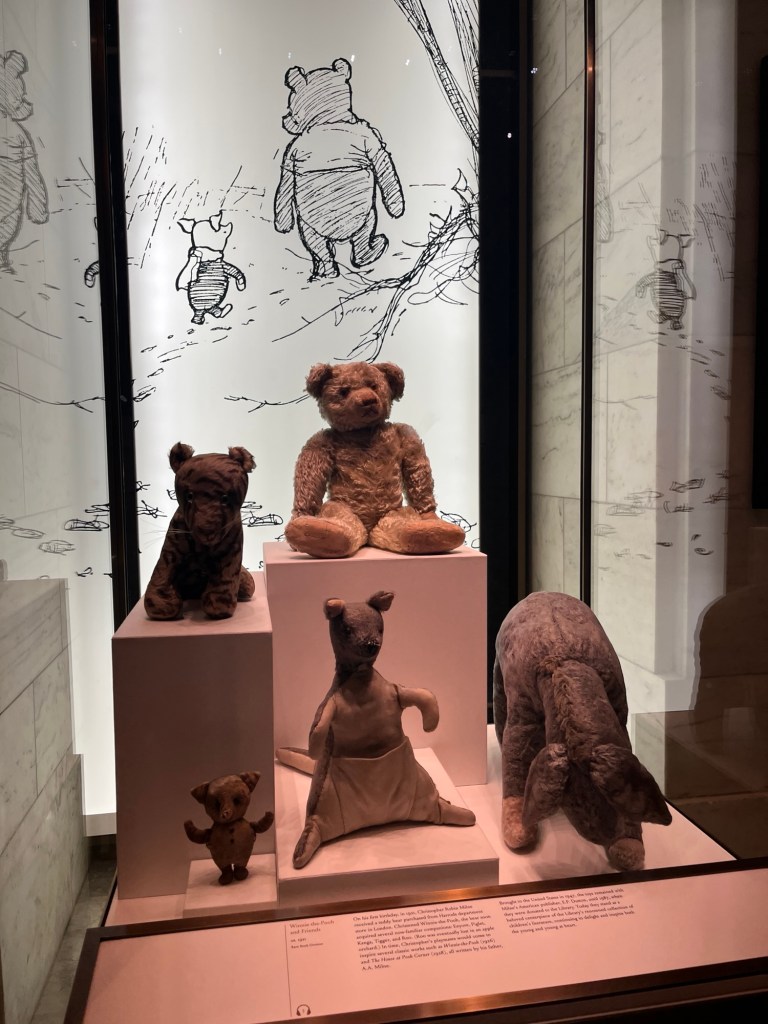
Day 1 in NYC, I took the train in to grand central and ended up hanging out at a coffee shop until NYPL opened. Upon taking the obligatory outside the front step photos, and entering the building, I was immediately struck by the beautiful architecture! I took the stairs to the third floor, and explored the building and its exhibitions from the top down. I did not get to see the infamous rose room (I will go back for it), but did see an amazing variety of their collections (much of which is currently themed around America 250). My favorite exhibit they had up was the treasures exhibit on the first floor. Some of the highlights from this exhibition include, the original Winne the Pooh stuffed animals, a book of Audubon’s birds, writings from well known authors, and more. The topics covered in the exhibition covered everything from colonization, trade and globalization, and the civil rights movement, to things like the Winnie the Pooh kids toys. I also loved the historic phone booths still set up for visitors to take photos in, as well as the gift shop (I am a big proponent of one must always visit the gift shop). After securing a postcard for my wall of postcards, I headed to Time Square and Broadway to walk around for a little bit. I then circled back and walked through Bryant park before taking the train back to White Plains.
6/6 Saturday:
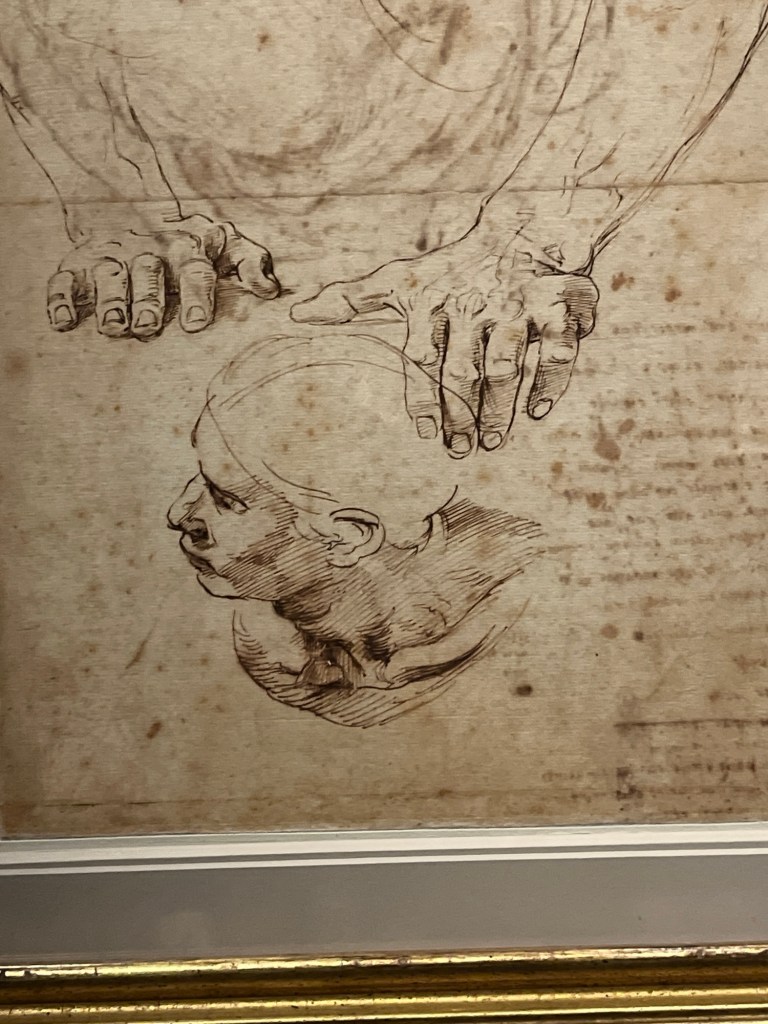
Day 2 in NYC, I decided to go to the MET, and use the NYC metro for the first time. Using the metro was a breeze (yay), and I had no trouble getting to the MET. Upon getting past security, the next step was choosing where I wanted to go, recognizing that I could come to this museum every weekend for my entire summer and still not see everything. I ended up choosing to go see the Raphael exhibit on the second floor. The exhibition was beautiful even if slightly packed (it seems as though myself and 100 others all had the same idea to go when they opened). Starting with his father and other artistic influences, the exhibition takes you through Raphael’s life and work. The exhibition featured many different mediums, but I particularly loved the pencil, chalk, and charcoal sketches that he did in preparation of his works. I especially loved the anatomy studies as I think they show not only the progression of his skill, but also his extreme understanding of the human body that allowed him to create such beautiful works. I also appreciated that they had a section of the exhibition dedicated to his contemporaries including Leonardo da Vinci (another one of the Italian renaissance titans, and personally my favorite), to show what ideas and who Raphael may have been responding to in some of his work.
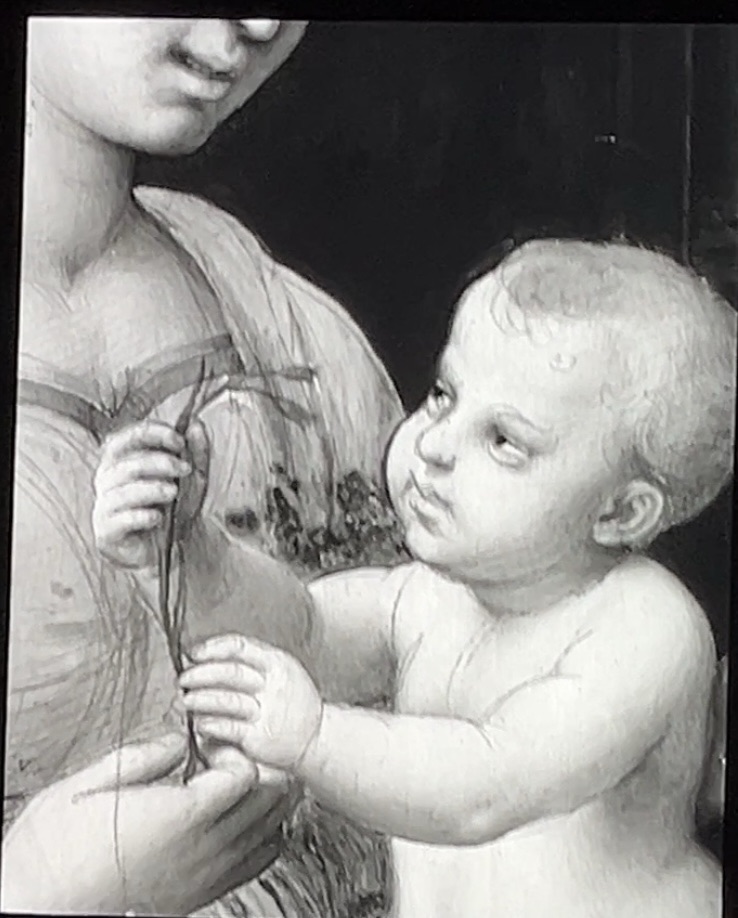
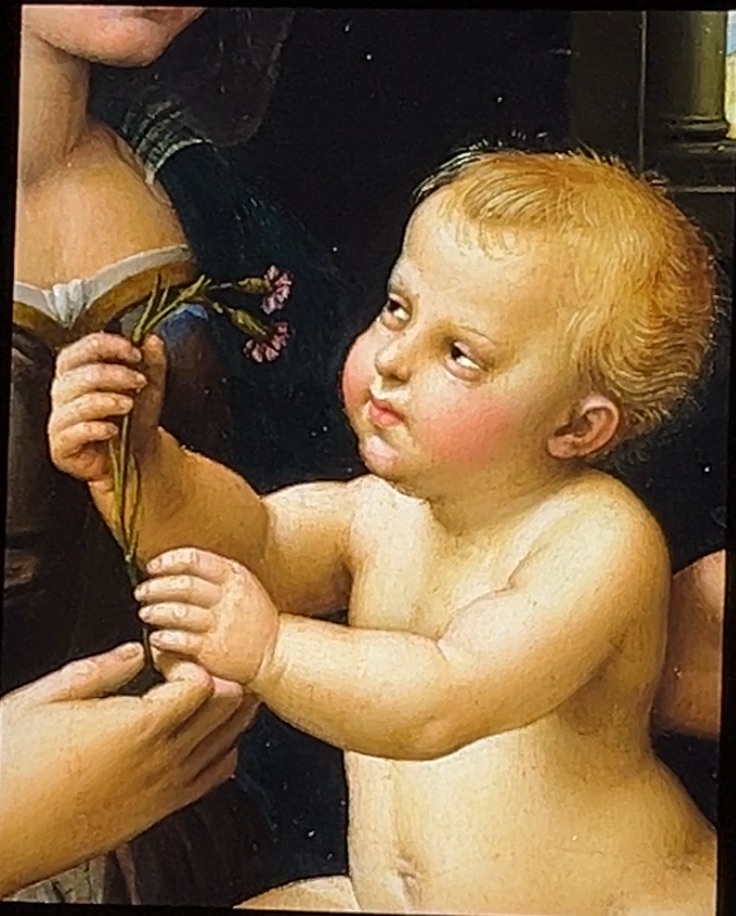
Additionally, the MET is not shy of discussing conservation work and efforts to understand the technical compositions of these pieces. One example of this in this exhibition was the video of one of Raphael’s works undergoing X-radiography, a non invasive technique that allows for the visualization of the internal structure and layers of art work (they did a similar display in the Japanese ceramic exhibition as well).
After spending a good portion of my morning in the Raphael exhibit, I wondered over to the 19th century Europe section to check off some of the impressionist’s works I had never seen in person before. Some of these included Van Gogh’s “Roses”, Cezanne’s “The Card Players”, and Degas’s bronze studies for the “Little Dancer” sculpture, (see Instagram post for more photos, link at the bottom of the page). All in all, I walked through the 19th and 20th Century European wing, the Arts of Ancient Greece and Rome, Ancient Asia (including China, Korea, and Japan), and the Medieval section before I headed back north for the day.
6/7 Sunday:
Lucky for me, the Morgan Library and Museum offers free tickets for college students on the first Sunday of every month, meaning that I have had the plan to visit the Morgan in my calendar for a while now. This was a short trip into the city in the morning, as I had other responsibilities to work on in the afternoon (including writing this blog). The Morgan Library is completely doable in a single morning as the building is much smaller than NYPL and the MET. I went to every exhibition room they had open and read 90% of the provided signage and still only spent about three hours there. I recognize that if you are not a book person you could easily spend less time there, however I am a book person and plan on going back for research down the road. Anyways, the Morgan is home to the personal library of J.P. Morgan, and the story of Belle de Costa Greene, the first director of the museum, as well as the Morgan’s personal librarian during the period of the collection being a private library.
The rooms are beautifully decorated and like NYPL, the Morgan also has an exhibition celebrating America 250 that includes pieces such as Thomas Paine’s “Common Sense,” a copy of the Declaration of Independence, and a letter written by Martha Washington to her sister. The main library room was admittedly of the most interest to me, as books line the walls floor to ceiling in beautiful book cases. Many of the books were housed in rare book boxes or decorated four flap enclosures to protect them while on the shelf and on display. There were four display cases around the room that featured the jewels of the collection, including a Gutenberg bible. (Again, see instagram for more photos)
Belle de Costa Greene’s office has been converted into an exhibition area, and the collections on display mostly consisted on Ancient Babylonian works. This room was were I first noticed the data loggers that the Morgan has deployed. For context, data loggers are used to record environmental information including but not limited to temperature and relative humidity of a space or micro-environment. This data can then inform different display choices, energy consumption, and long term preservation of collections. From what I could tell, the Morgan is using data loggers to collect the environmental data from their glass display cases. Cases such as these create a micro-environment around the objects placed inside of them, as the case acts as a buffer to the exterior environment. Micro-environments can be a great thing, but sometimes if the wrong conditions are held for a long period of time biological deterioration agents or chemical deterioration agents (ie. mold and metal corrosion) can start to impact the objects housed in the micro-environment.
Alright, that was a lot and a very busy weekend. That’s all for now 🙂
 the summer shift
Leave a comment