Well, I have completed my first week of working at A.M. Art Conservation! Boy have I learned a lot…
Day 1:
Today was mostly spent working on documenting a very large textile work that had come in the previous week. This particular work was a Burmese Kalaga from the 1990’s. To document this work we laid it out on drop cloths and I had to stand on a stool to take full length photos of the work because it was so large. Gathering the photos, uploading them, editing and annotating them took most of the morning. After lunch, I started my first condition report with the help of one of the conservators in the studio. It was super interesting to see how they set up their template information for different kinds of documentation, it makes a lot of sense to break up the condition reporting into historical information, physical description, and then surface and structural conditions. I think it will take some practice before I am able to fully differentiate between what is surface and what is structural (this was what gave me the most trouble across reports this week), but the conservators I am working with were patient with explaining the differences between the two on a case by case basis. Anyways, that pretty much concludes day one.
Days 2-4:
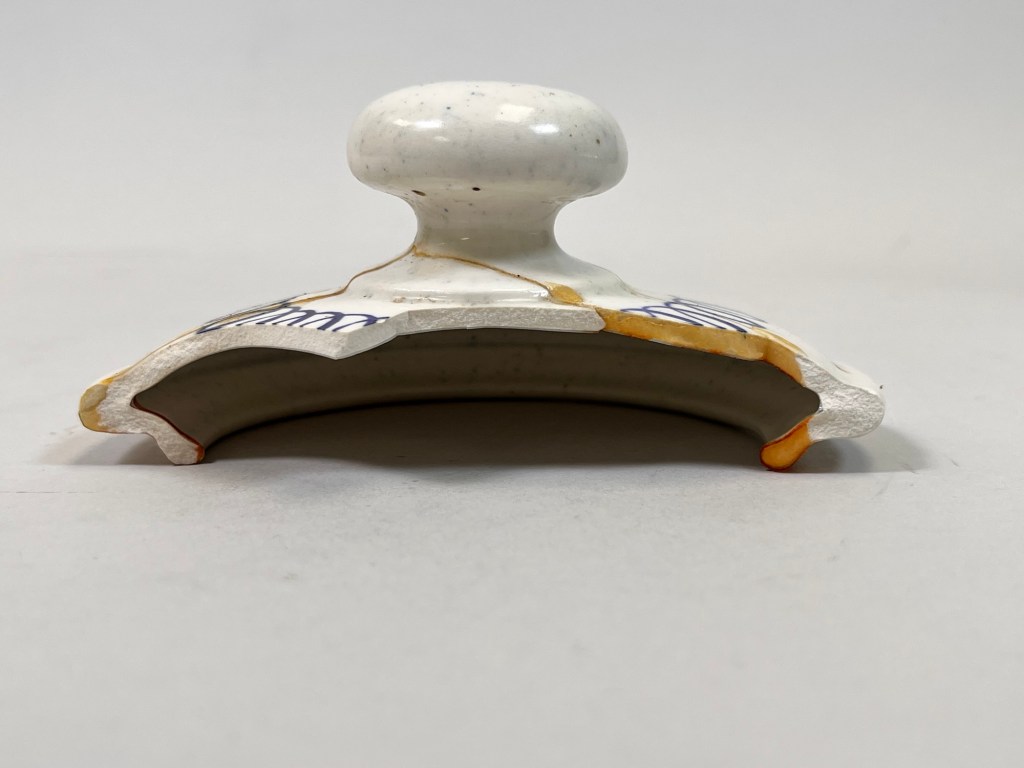
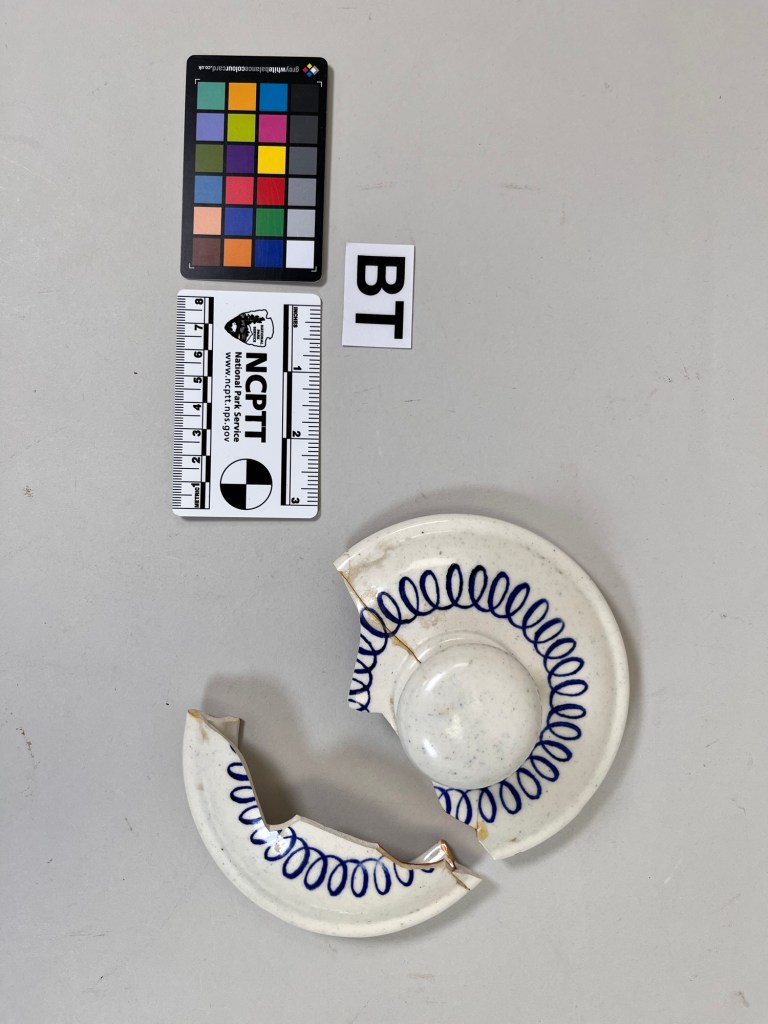
Days two through four this week were the days that I really started getting familiar with the objects I will be working on this summer. Day two was spent photographing six different objects, including two African works, two wool carding combs, one framed section of quilt with a shoe scraper, and one ceramic ginger jar lid. As I got more of the photography done I felt more confident in my ability to capture the angles and details needed across the works. I also felt like I got more comfortable in handling different kinds of objects, as my previous experience in conservation has been strictly with book and paper materials.
All the photos were taken with my phone, and once that was completed I spent the rest of the day uploading them to the shared folder and editing them if needed. My primary focus before the day ended was making sure I had completed the photo documentation work for the two African pieces as those were the objects that I would start treatment on first.
In addition to the photo documentation I completed I also made of a batch of Paraloid B-72. Paraloid B-72 is an adhesive commonly used in objects conservation for small consolidation projects and or reattaching areas of loss or detachment on objects. I will be using this adhesive on several of the objects mentioned above as well as a Buddhist shrine piece that had already been photographed prior to my arrival. (More on this when I start this treatment!)
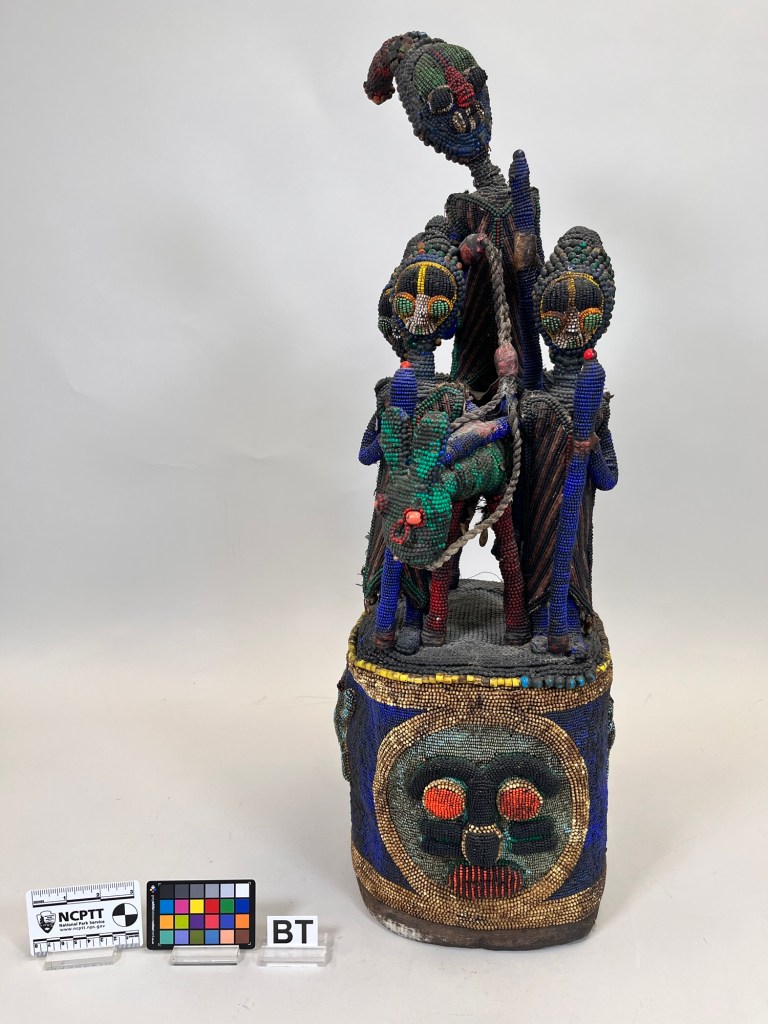
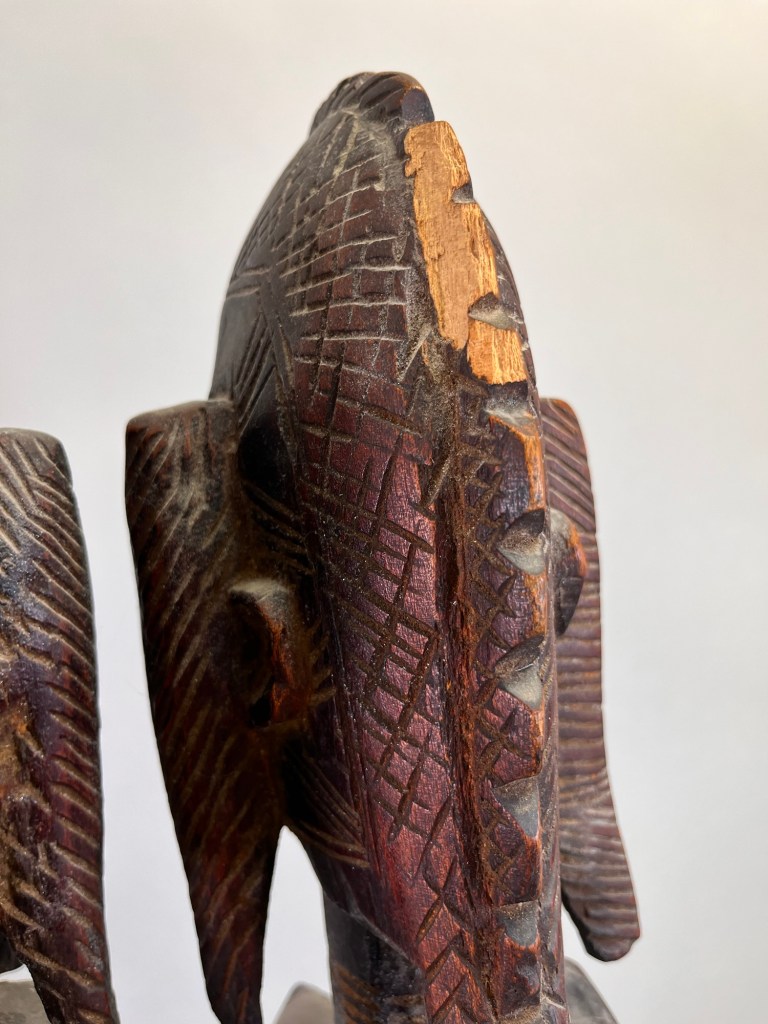
Day three I spent completing the condition reports for the two African works, a Yoruba ceremonial crown, and a Dogon pair statue. Both presented interesting challenges. The Yoruba crown was covered in lots of surface debris and grime, and the central figures head was dislodged from its intended placement. (Refer to photos below) The Dogon pair was also in desperate need of cleaning, but also needed a fill on the back of the female figures head, as there is a section of loss, (Again refer to the photos below). The conservators in the studio helped me to complete the reports and gave feedback as I was working to ensure that I was covering all of the necessary elements. That pretty much concluded what I did on day three.
Day four is where I got to start some of the treatment projects I will be working on. Specifically, I was working on the two African pieces, and ended up completing both a brush vacuum cleaning (with a HEPA Filtered Nilfisk Vacuum) and a soot sponge cleaning. I learned that soot sponges are GREAT for gently clearing away the dust and debris on these pieces, made from a soft corrugated rubber, the soot sponges are able to gently pull away the grime.
Photos:
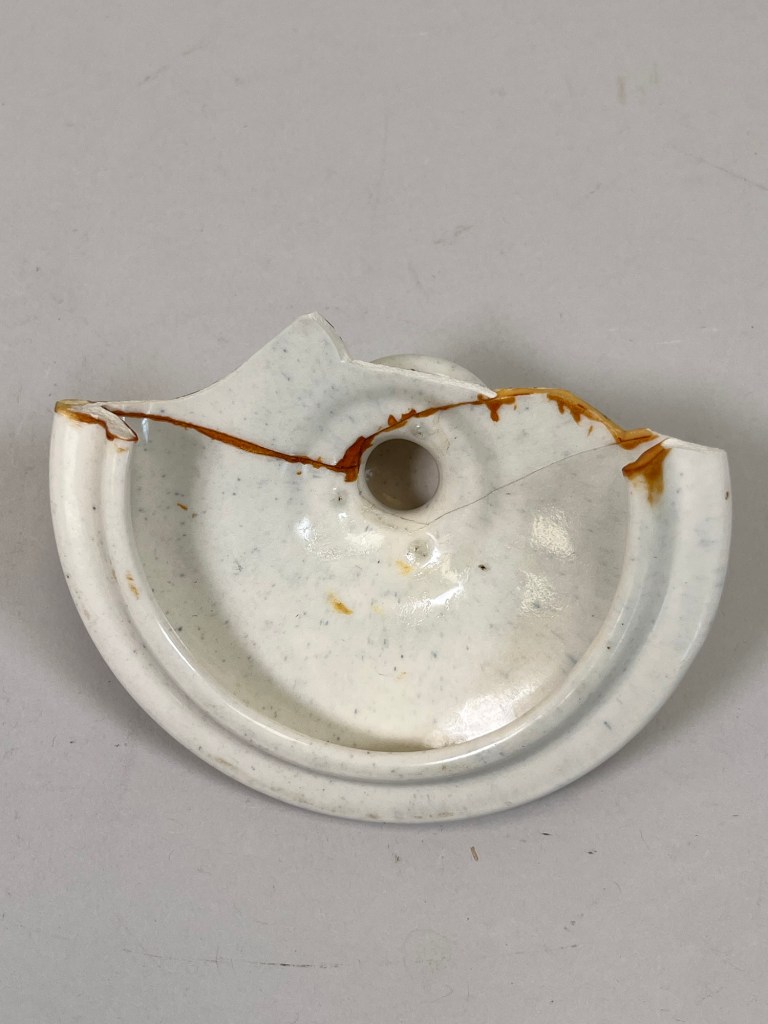
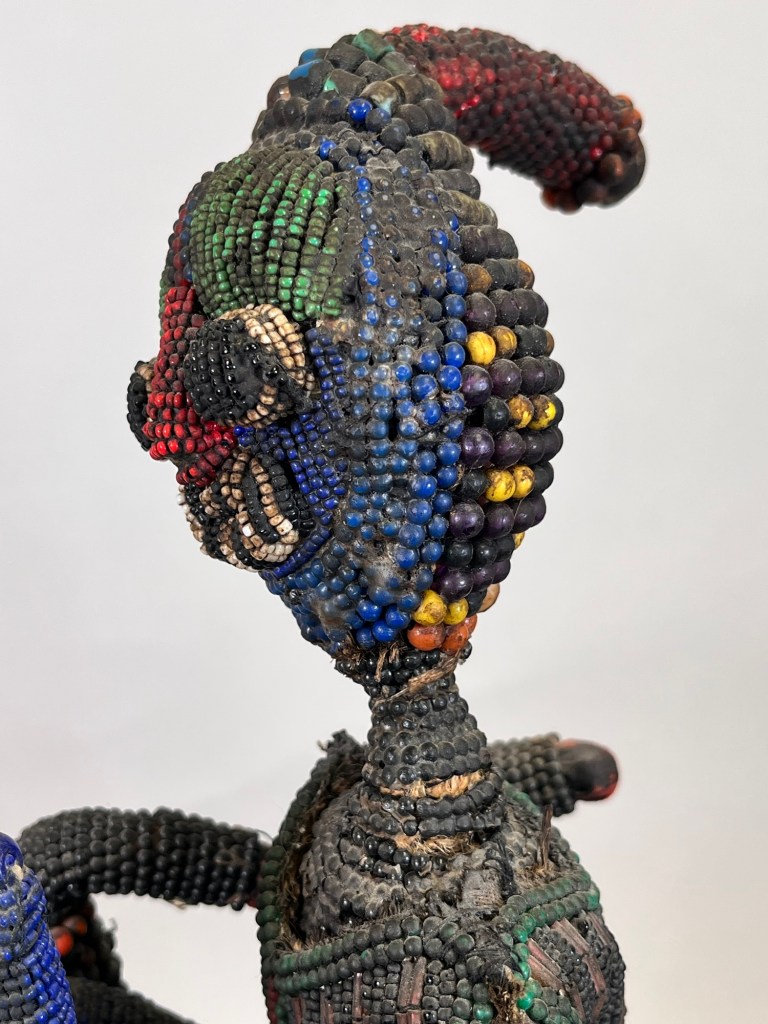
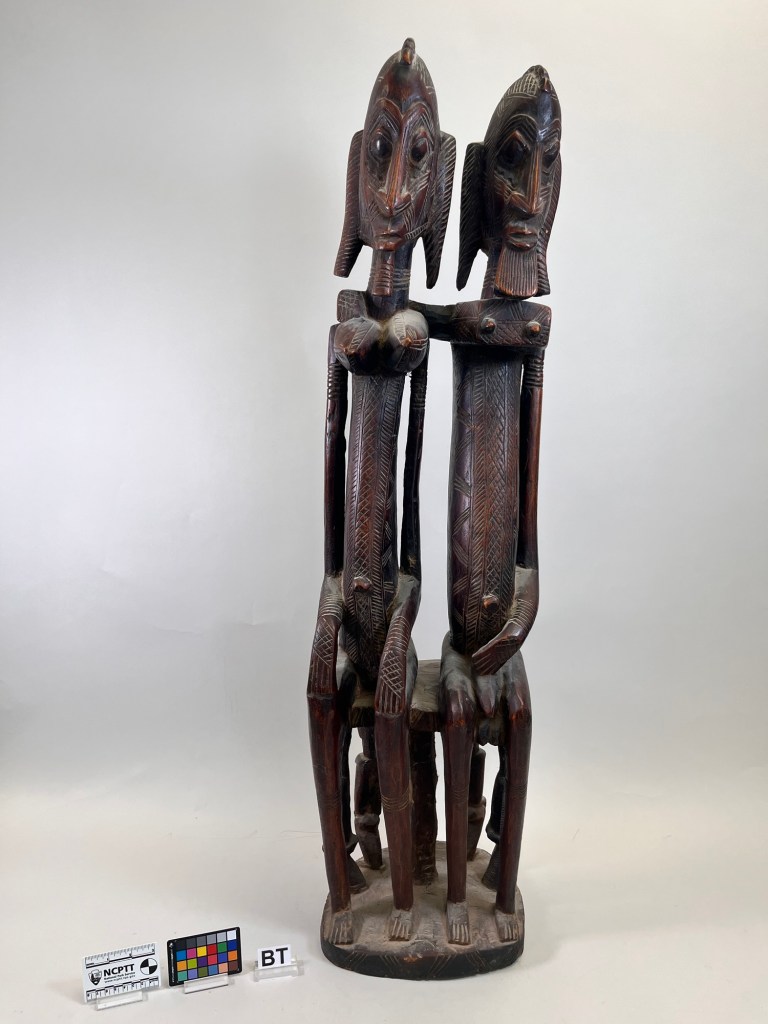
That’s all for now, my hope is get on a better posting schedule now that I have settled in a bit (the next chapter will feature my weekend adventures in NYC!)
 the summer shift
Leave a comment